What is trauma, really?
Trauma is not defined by what happened to you, it is defined by how your body responded to it. When something overwhelms our nervous system, whether a single dramatic event or a slow, steady weight over years, the energy of that experience can become stuck in the body. It lives on as tension, anxiety, fatigue, or a quiet sense that "something isn't right."
It doesn't always come from obvious sources like accidents, violence, or loss. It can also build quietly through chronic stress, emotional neglect, difficult births, witnessing others' pain, or generational wounds carried down our family line.
Stored trauma rarely announces itself; it speaks through the body and behavior, creating subconscious patterns that quietly dictate how we react, how we cope, and ultimately how we live our lives.
It shows up as chronic tension, anxiety, numbness, disturbed sleep, difficulty in relationships, or the nagging sense that life is happening to you rather than with you.
Much of what we hold are unprocessed emotions. When we don't fully feel and release them, they settle into our tissues, our breath, and our posture.
Fear: Held in the chest, stomach, and throat. The voice that whispers, 'am I safe?'
Guilt: Held in the shoulders, upper back, and hips. The weight of 'I should have…'
Anger: Held in the jaw, neck, and hands. The fire of 'this isn't fair.'
Sadness: Held in the heart and lungs. The ache of what was lost.
Each one is a doorway. When we meet these emotions in the body rather than analyze them in the mind, they can finally move through us. Trauma is not a sign of weakness, it is a natural, human response to being overwhelmed. Our bodies are designed to shake off the fear, return to peace and heal, just like animals in the wild. We just need the right conditions and environment to do so.
BRIDGING SCIENCE & SACRED MOVEMENT
The Edwin Tan Approach
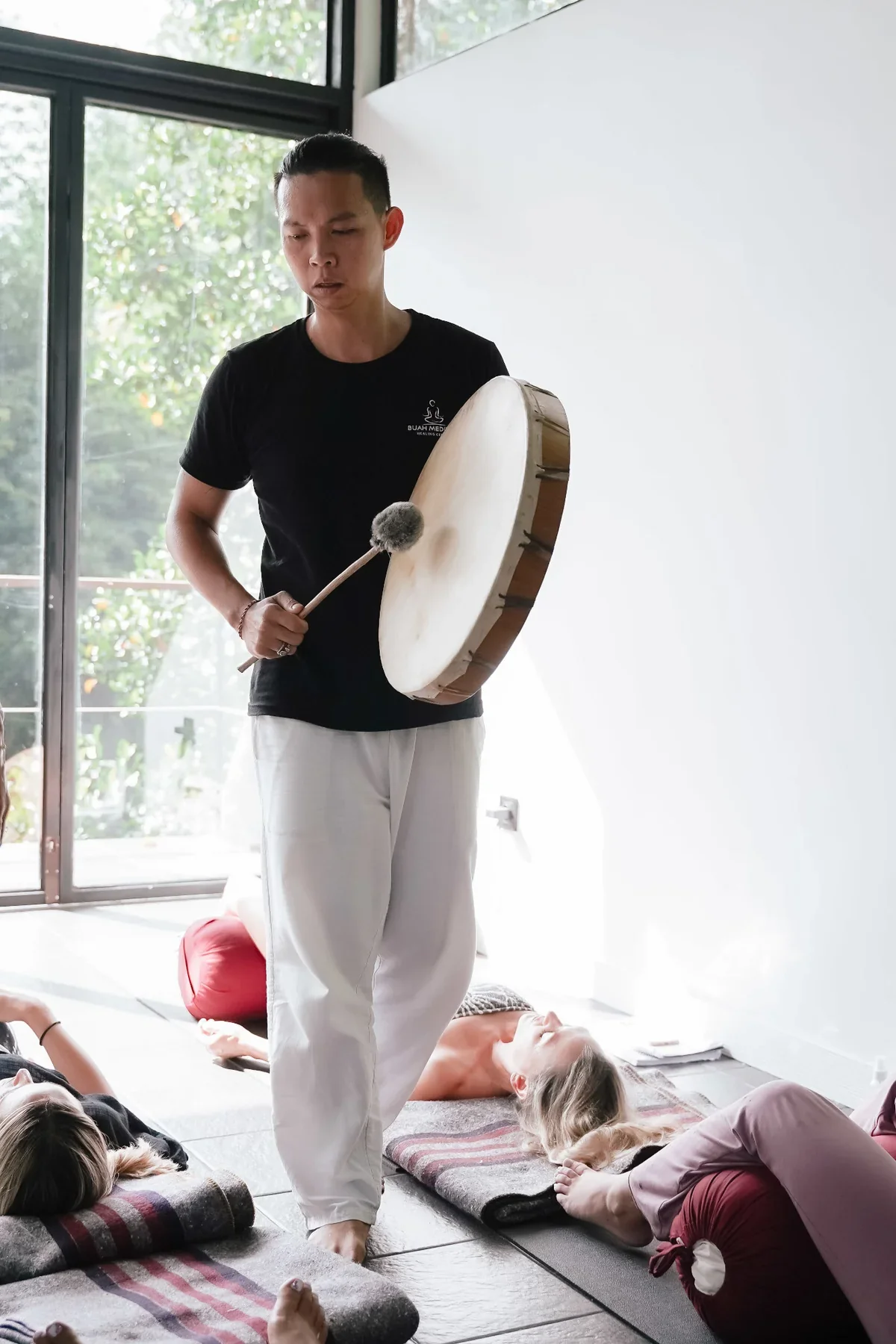
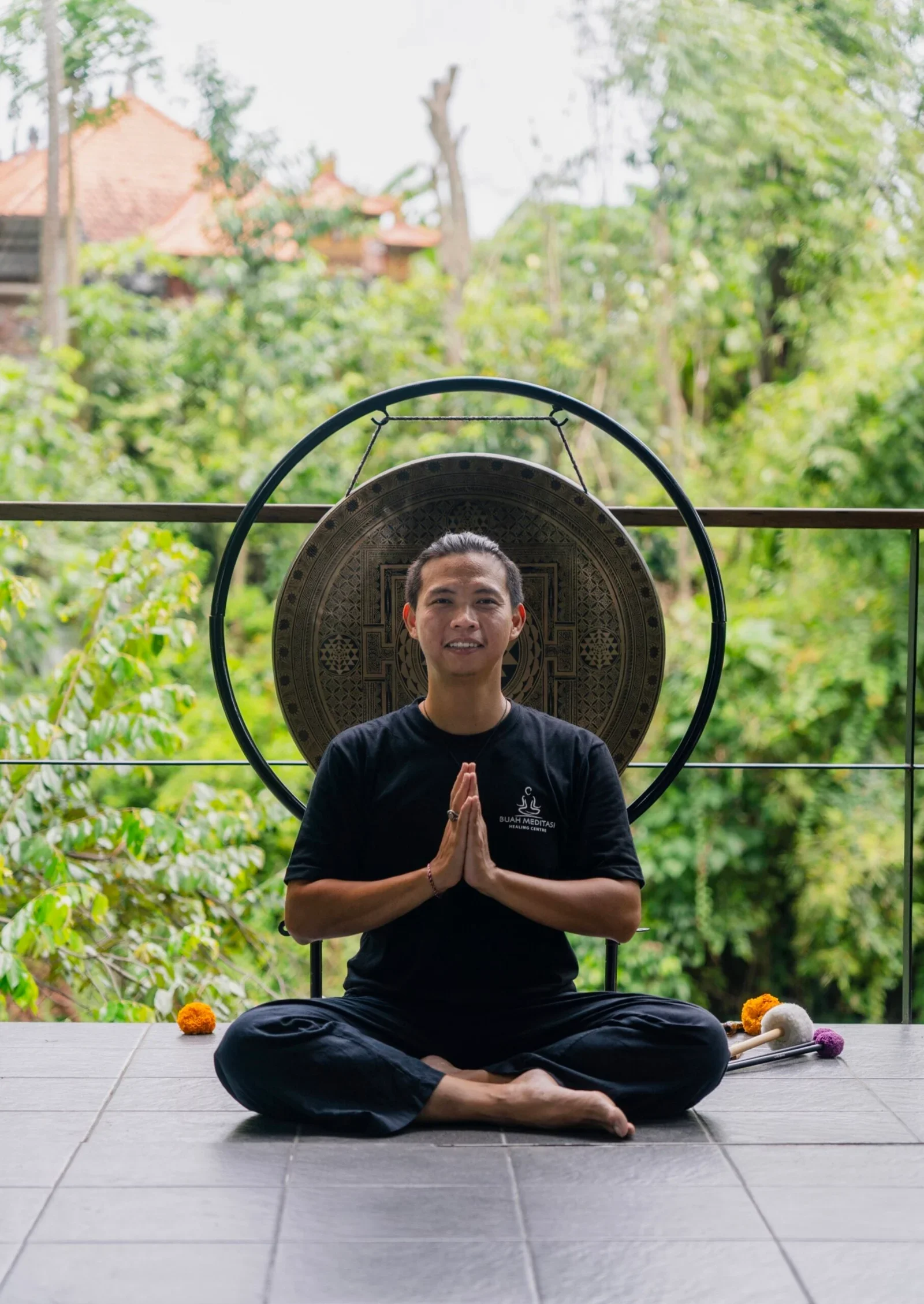
Our somatic work is built upon the profound lineage and teachings of Edwin Tan at Buah Meditasi in Bali. Edwin’s visionary approach to trauma healing beautifully integrates the Western clinical insights of leading pioneers with the deep, elemental practices of the East.
His framework mirrors the landmark understanding of psychiatrist Bessel van der Kolk (The Body Keeps the Score), proving that trauma is fundamentally a physiological event imprinted in the nervous system, the muscles, and the breath long after the mind has moved on. Furthermore, Edwin’s method directly honors the work of Dr. Gabor Maté, mapping out how unresolved emotional pain manifests as unconscious behavioral coping mechanisms that ultimately run our daily lives.
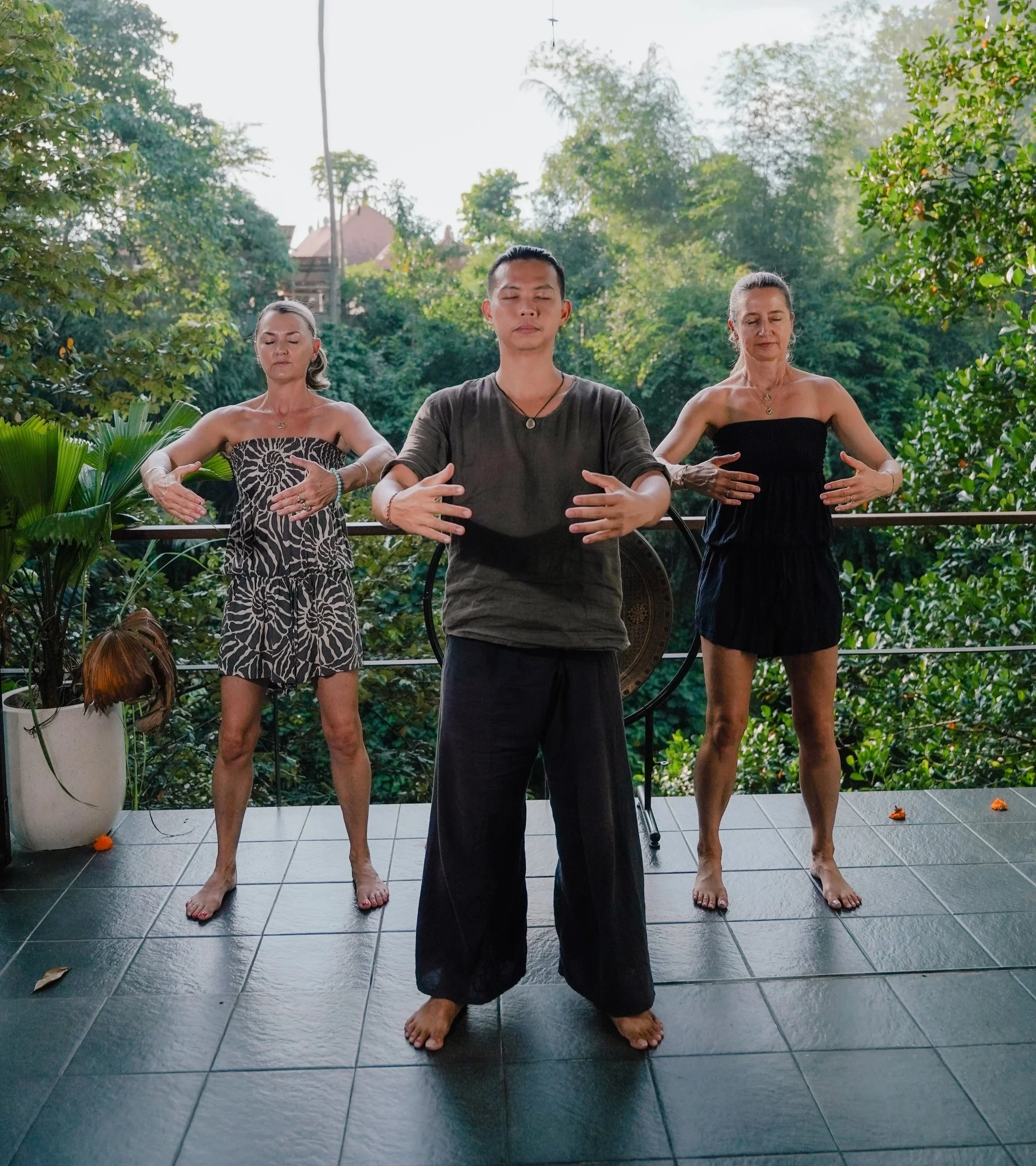
To unlock these deep, historical files, Edwin's teachings bring in the ancient practice of Qigong and targeted breathwork. By pairing sacred, flowing movement with conscious breath, we don't just talk about the trauma, we physically shift the energy channels where it lives. This specific integration stimulates the vagus nerve, quieting the survival mind, and gently breaking the unconscious behavioral loops that keep us stuck. It is a practical, deeply embodied response to trauma that allows the body to finally say what it has been holding onto for years.